Drawings for screen printing
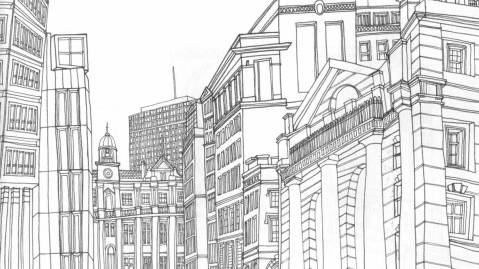
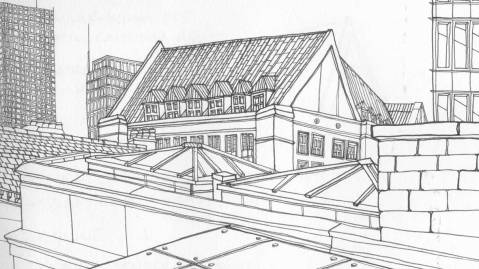
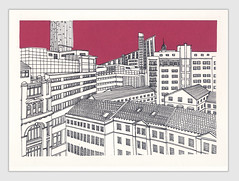
I’m going to use these drawings for a series of screenprints. I’ve started (and almost finished) the first one and after a few issues, have the next lot exposed and ready to be printed. I’m using paper stencils for the background colours, so everything is a bit ‘off’ on purpose – I didn’t want it to be perfect and consequently, end up looking like it had been Photoshopped…
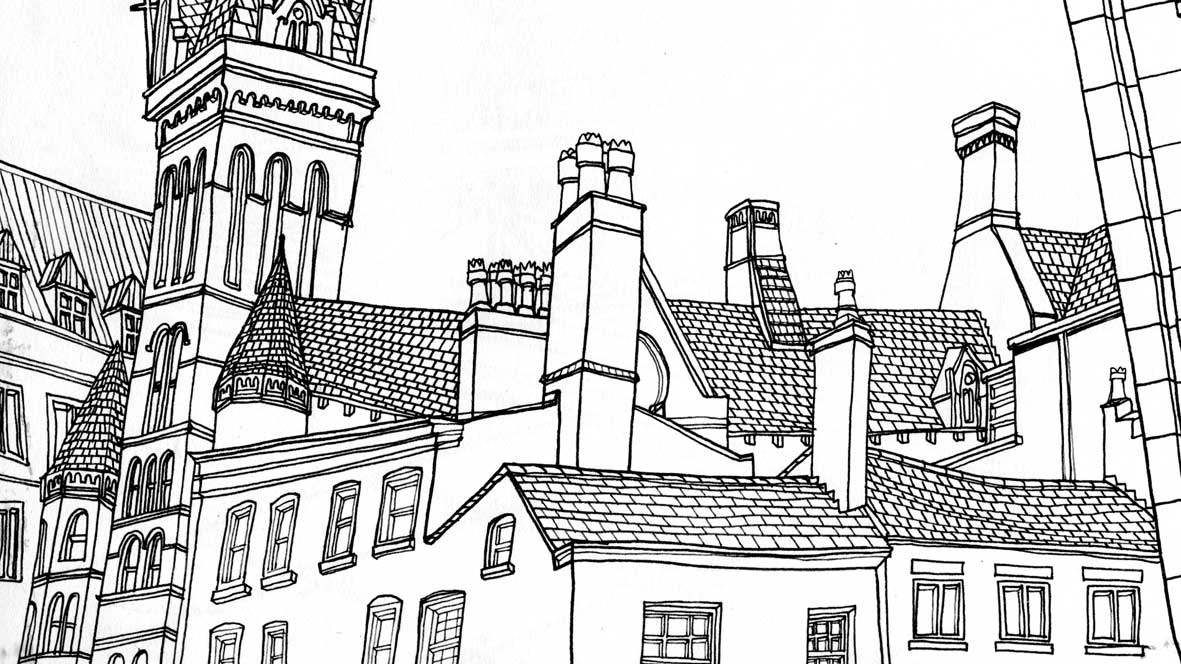
I’m off to Hot Bed Press in Salford tomorrow to start on the second image – I’ll try to remember to take pictures to show each stage…
I’m also going to start on a bigger drawing of Manchester City Centre – at the same scale but to encompass more. I’ve been scouting around trying to take pictures from the tops of car parks but have so far been politely asked to remove myself from each one as I might hurt myself or something similar (?!). So remember everyone – taking a picture is MUCH more dangerous than parking your car. Seriously though – apparently I need to get permission from the owners first. I’ll let you know how I get on!
More urban sketching
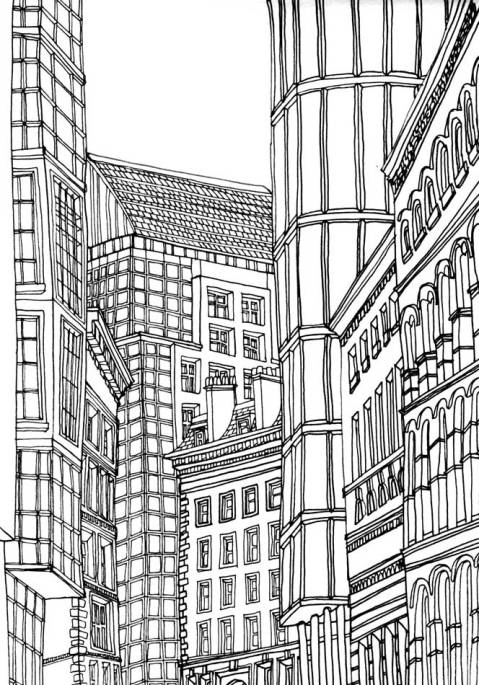
The latest sketches from Manchester city centre. Tried using just a 0.3 pen so without any pencil or rubbing out allowed…
Less accurate but a better result, I think!
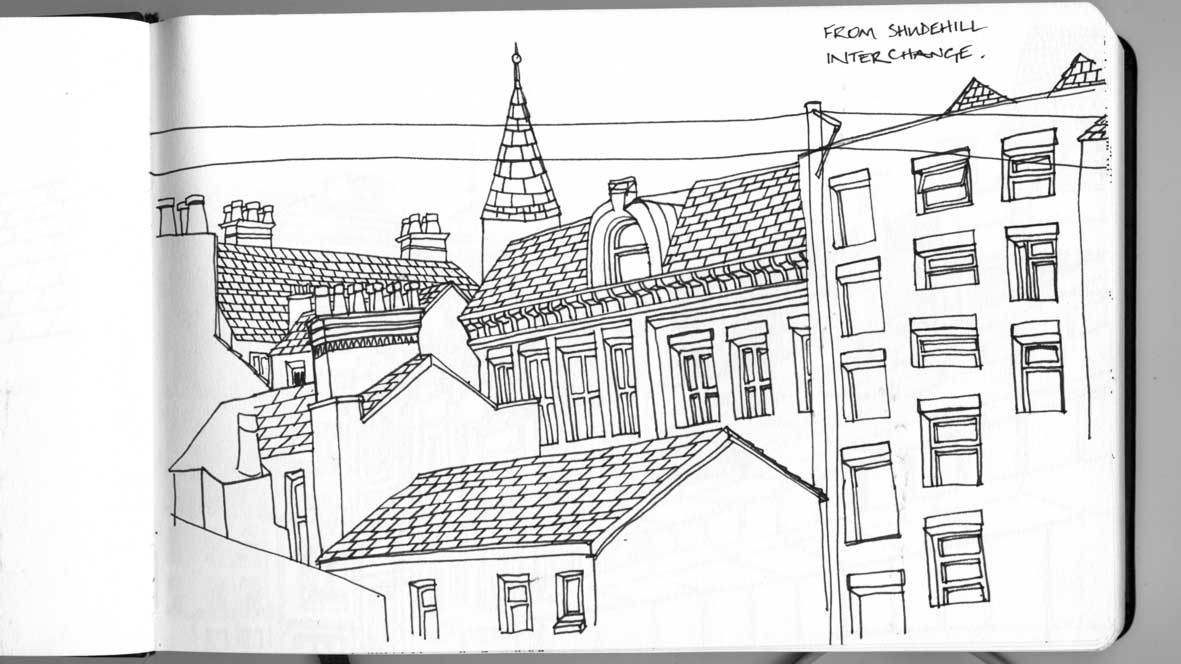
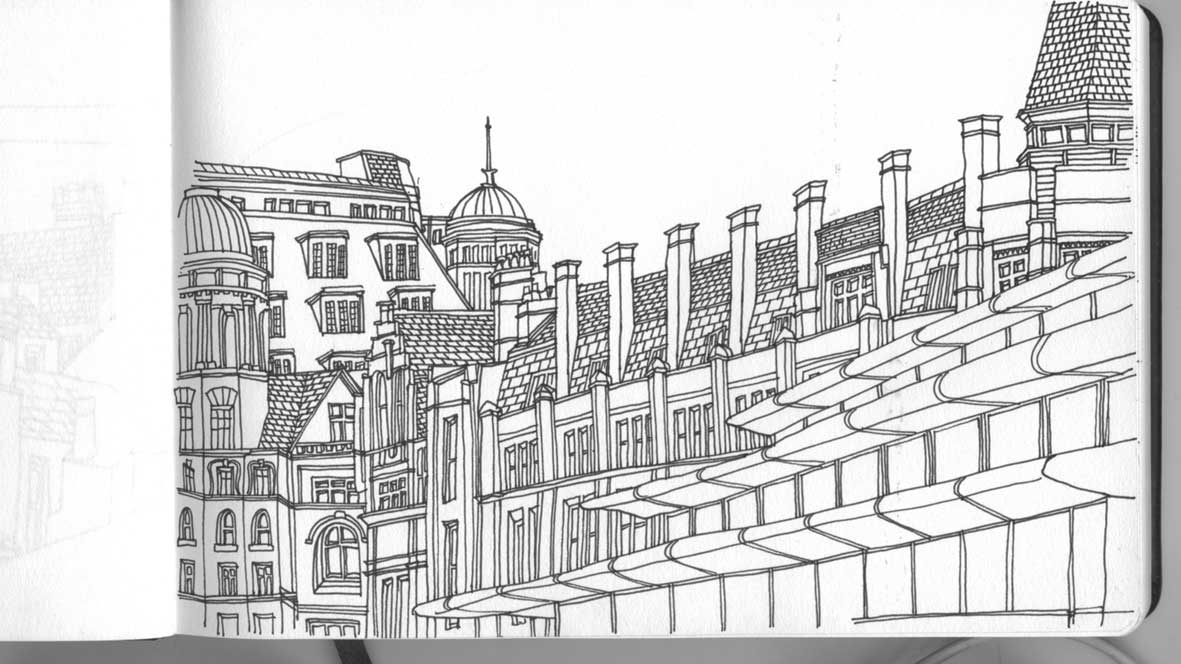
Urban sketching in Manchester
In a bid to speed up my drawing (and get better at it), I tripped in to Manchester city centre today to attend my first urban sketching event.
Mass confusion ensued at Victoria train station as there was also a walking group meeting at the same place and time. I’m not entirely sure that some bemused walkers didn’t end up sketching all day and some urban sketchers wondered why not many people in their group were sketching…
A fellow Woodend Mill artist Hugh Winterbottom also agreed to come – we spent about half an hour trying to find a good spot to sketch from but eventually agreed on this view looking towards the Cathedral and Harvey Nichols down Fennel Street.

Depressingly, this is as far as I got in an hour. So much for trying to be quicker and have a freer style.

Ho hum, I’ll keep trying. I’m going to redraw this viewpoint again sitting in the relative comfort of the studio, which is against the philosophy of the ‘urban sketcher’ (drawing on location and not from photographs – I suspect this will be easier in the warmer weather!).
I left early (cos I’m soft) so didn’t get a look at everyone’s sketches (you all get together at the end to compare drawings) but I’m sure some pictures will be available on the Manchester Urban Sketchers’ Facebook page soon, which is here.
Another quick sketch I did whilst waiting for train…

I’m back… again!

I’ve just arrived back from installing an origami piece in Hong Kong for Chinese New Year. Hot on the tails of completing my London commission, I was asked to create an origami installation for Pacific Place, an upmarket shopping mall on Hong Kong island which houses the likes of Cartier, Bulgari, Tiffany & Co and Burberry.

The finished installation.
The peach trees below the fish will eventually burst into flower.
As the title of the installation was ‘Shoals of Prosperity’, it seemed ideal to create a large 3D fish made from thousands of small origami fish – 4876 in total. The deadline was incredibly tight, so I waved goodbye to Christmas and set about folding and folding and folding (with the help of some willing assistants – thank you Amy, Kate and Martin!).
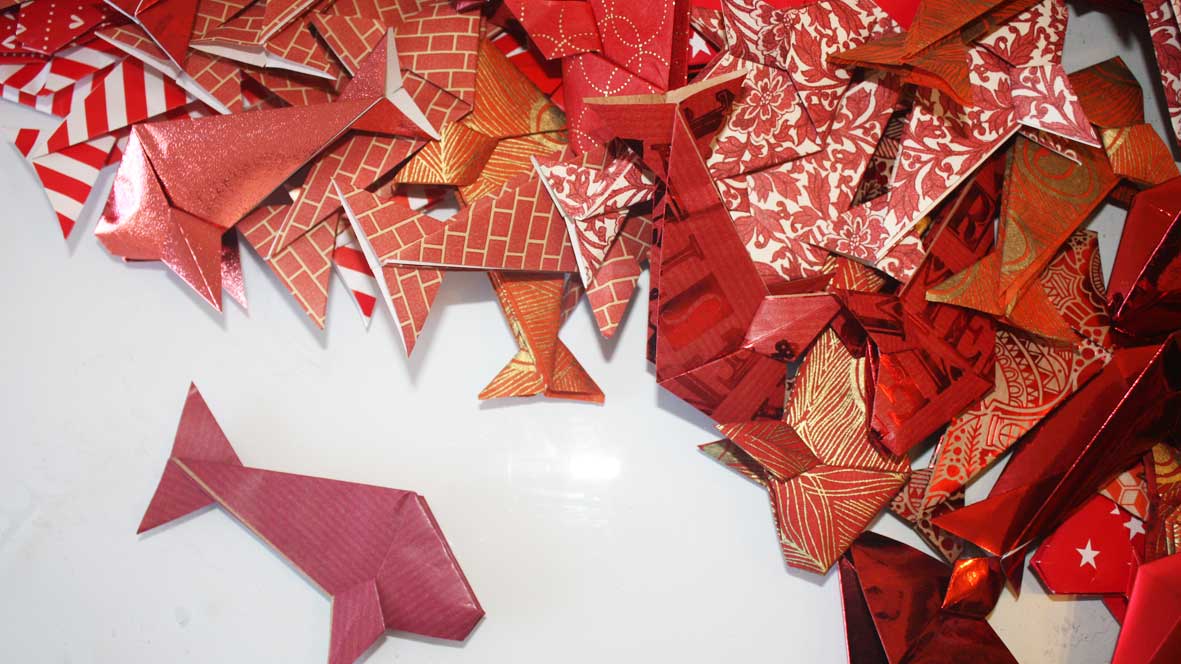
Making the origami fish
The tricky part of the commission was to create a realistic fish shape from lots of origami hanging from fishing wire. And the fact that, due to its size, I wouldn’t be able to see the completed piece until it was installed in situ. The overall size of the fish was six metres in length by three metres wide by four metres in height and was all hung from lines of fishing wire hung from acrylic rods.

Its finished!


Me pretending to be a film star with my entourage
Once installed I spent three days doing lots of media interviews for newspapers, magazines and TV – more on this later. I can now say Happy Chinese New Year in both Mandarin and Cantonese!

Pointing out Pacific Place from ‘The Peak’
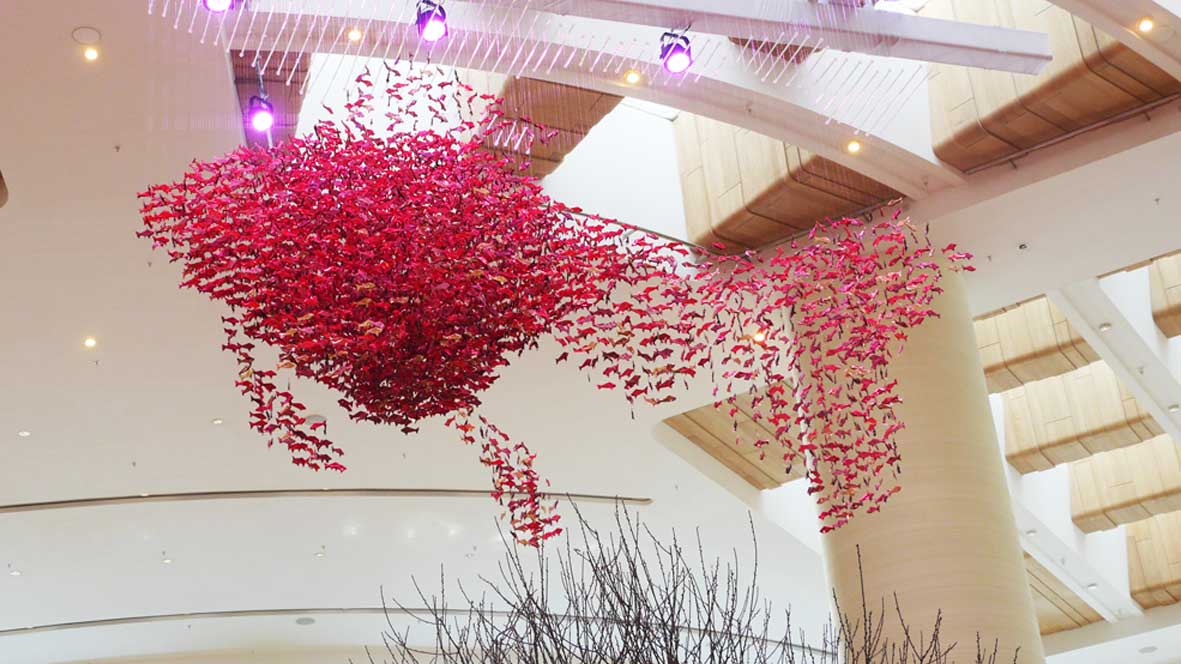
- The six metre Fantail fish made from almost 5000 origami fish
20:20 Print Exchange
The sorting for the 20:20 Print Exchange is happening this week. The 20:20 is a national print exchange organised by Hot Bed Press whereby printmakers from studios across the UK each submit an edition of 25 prints measuring 20cm x 20cm. The prints are then sorted and each participant gets a random selection of prints back. Last year over 300 people submitted prints – I won’t reveal how many people have entered this year but it’s a LOT more…
My 20:20 entry is a three colour screenprint entitled ‘Print Manufactury’, created from a drawing I did of the Hot Bed Press studio building. The base white colour and the blue door were both created using paper stencils cut from newsprint. The third and final layer of black was from a photo-emulsion screen.
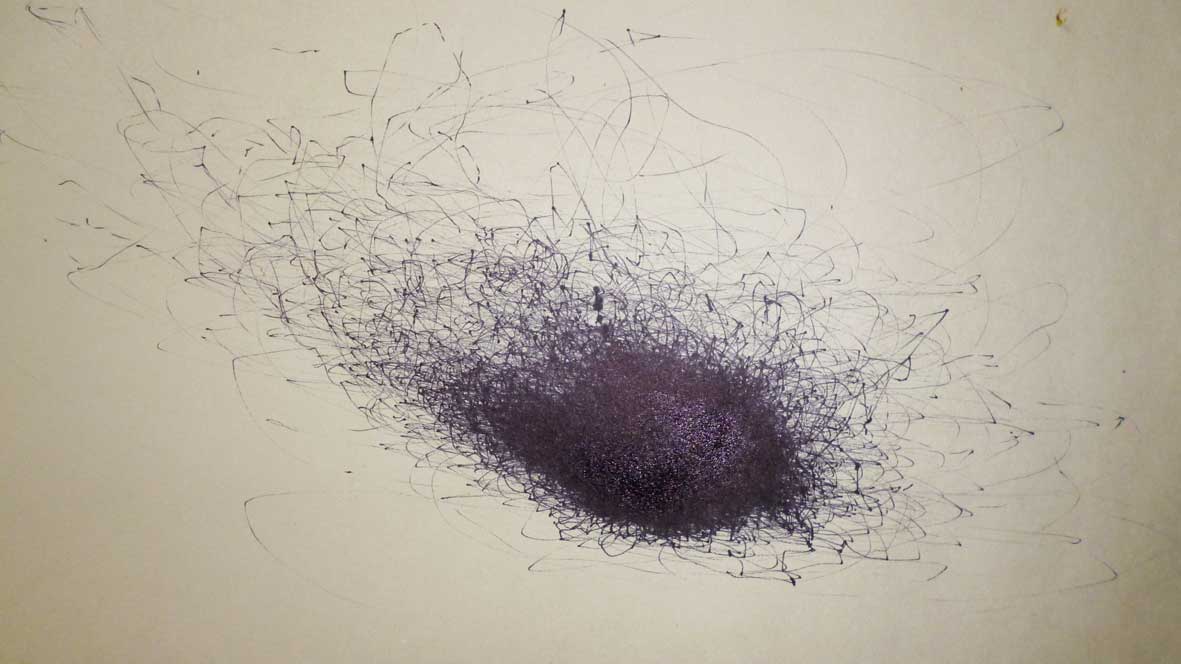
Here’s the original drawing…

And here’s the final screenprint. I used Somerset Grey paper so I could apply a white background for the building. I wanted it to be a completely self-contained image on the paper so removed anything outside the building that might ground it – for example the pavements, streetlights and surrounding buildings.

I’m back!
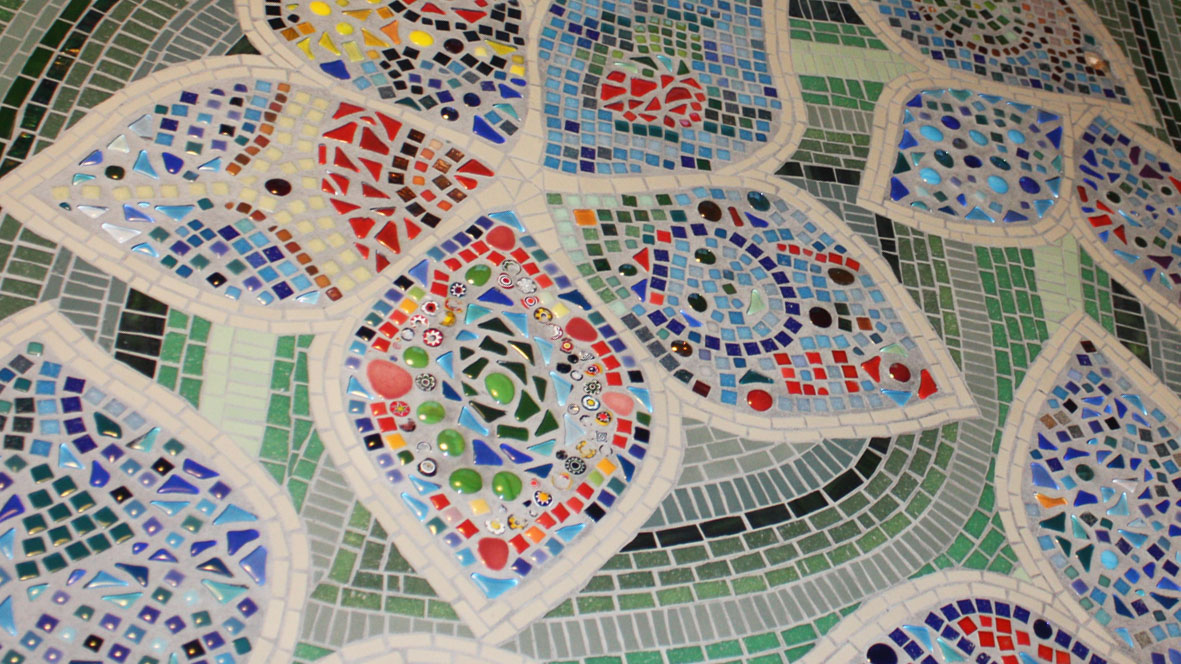
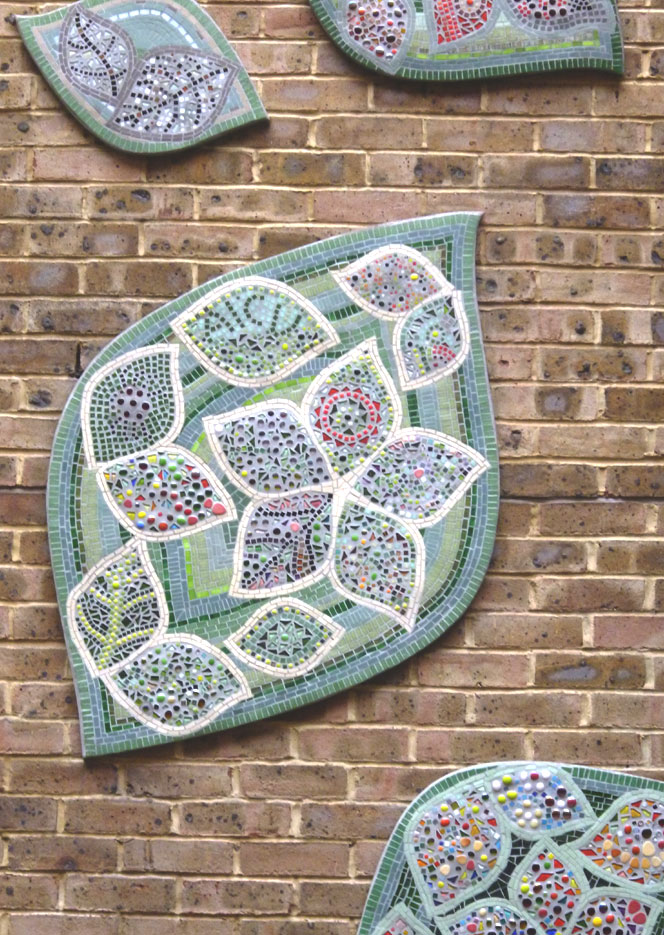
I’ve been ridiculously busy for the past six weeks working on my mosaic commission for the Royal Brompton Hospital in London. The project started six months ago when I worked with lots of patients, staff, parents and visitors to create leaf shaped mosaics that would eventually become part of a larger piece for permanent display in the courtyard at the hospital.
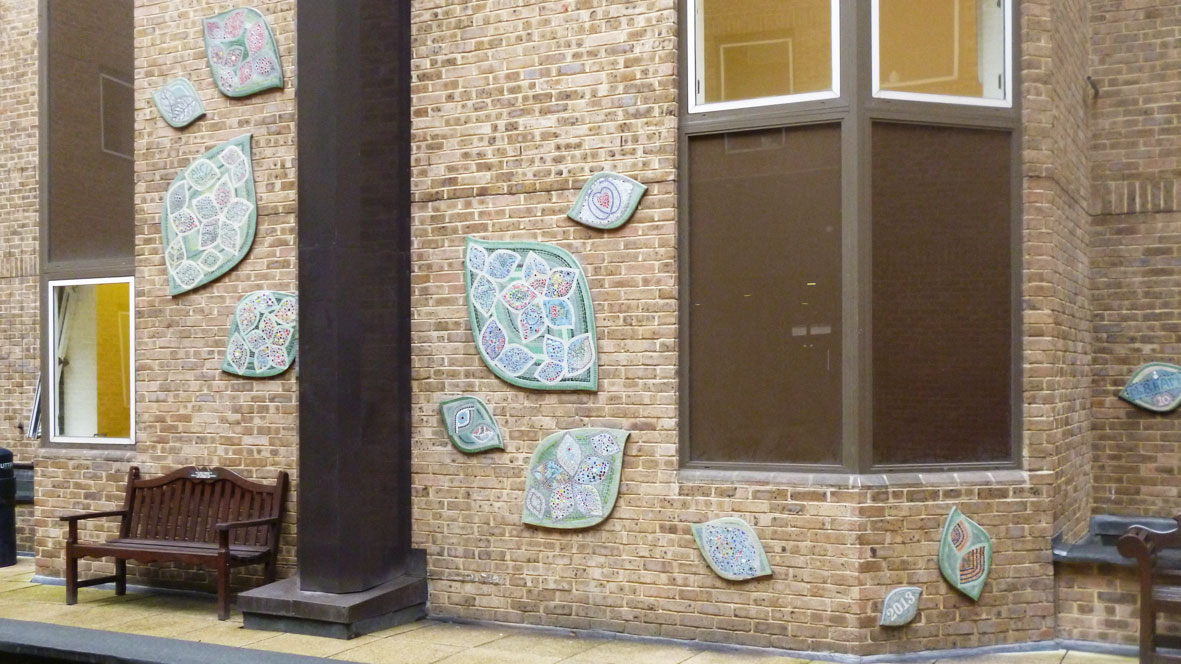
After a fairly wet and chilly weekend, all the mosaics were installed on the walls and looking fantastic. We celebrated on Monday with an opening event which some of the original participants came to. We had great fun trying to find their individual mosaics from the hundred or so that were included in the final artwork.
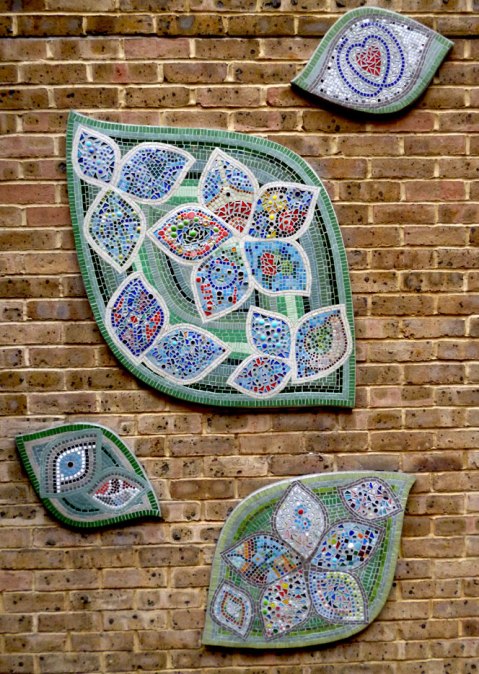
Each ‘leaf’ shape within the mosaic artwork was made by a participant in the hospital workshops. Once I had gathered all the participants’ artwork, I spent a few days arranging and rearranging the mosaics to get all the colours and individual layouts to work. These were then transferred to larger templates and I mosaiced around the leaves to fill in the background colours. These were chosen to compliment the participants’ mosaics but also to bring some much needed greenery to the hospital courtyard.
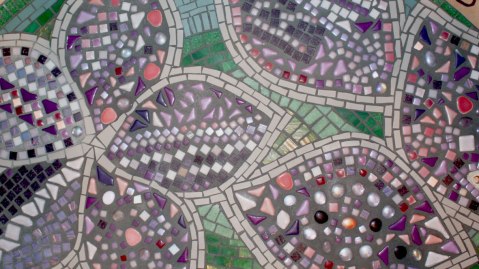
I also kept the in-fill mosaics to a fairly simple design, with most mosaics cut in a Byzantine tile form (20mm x 10mm) and laid in a primarily Opus Classicum layout. Opus Classicum is a combination of Opus Tessellatum and Opus Vermiculatum whereby the tiles are primarily laid in a brickwork pattern with any ‘objects’ within the background surrounded by tiles following its form. This allowed the mosaic pieces to really highlight the participants’ work whilst creating a simpler background to also set them off.



RSPB Wayfinders – installed!

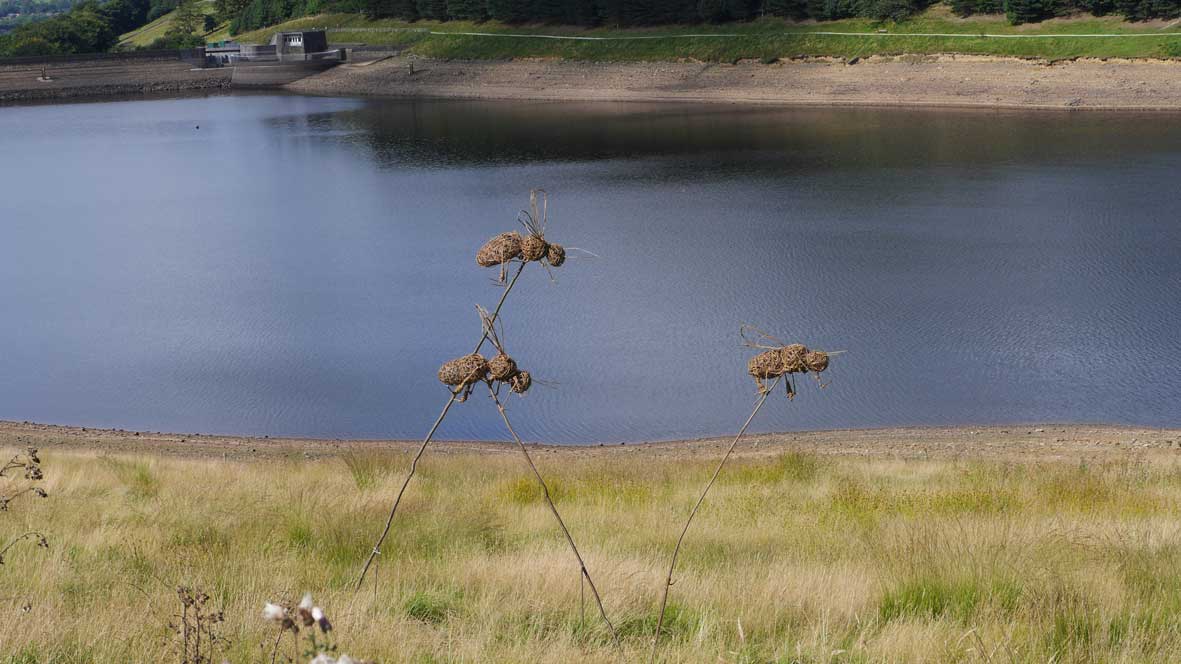
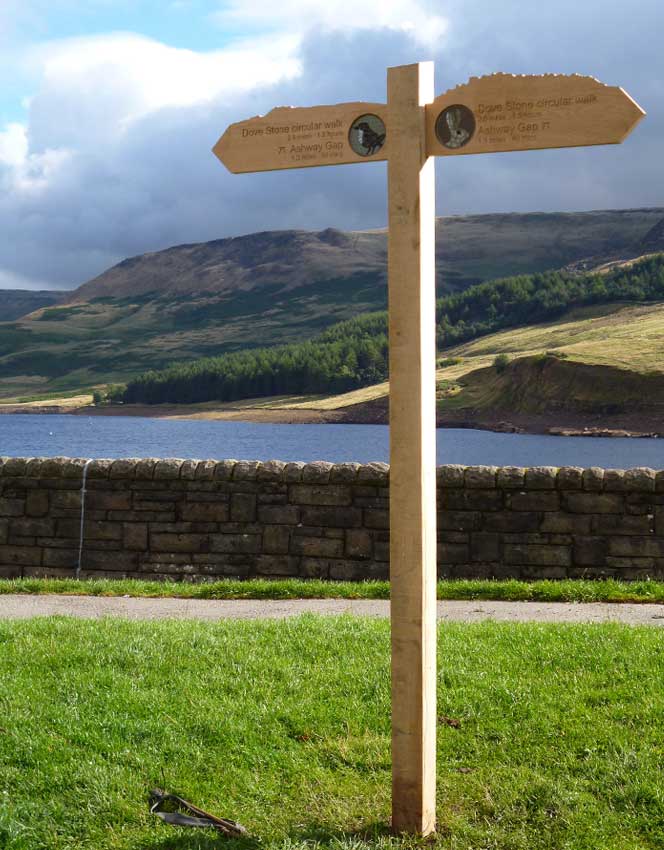
Last week myself and Richard Dawson spent a day at Dove Stone Reservoir installing the new RSPB Wayfinders. Made from solid oak, with CNC’d lettering and mosaic detail, the posts have been carefully designed and created to be sympathetic to the space at the same time as being useful! The mosaics all show flora and fauna found at Dove Stone and aim to inform visitors about local wildlife.
We had beautiful weather after a very wet Friday (nice soft ground) which made for a relatively easy installation, apart from the stones and the inaccessibility of some wayfinder sites by vehicle. Thanks to Sam and Joe who came and did some excellent hole digging and lumping of heavy things! And thanks to the lovely dog walker who supplied us with some wine gums in Binn Green car park.
Three blokes looking in a hole…

Richard, Sam and Joe at Chew Brook, Dove Stone Reservoir

Percival Fuzzington ‘helping’ by demonstrating how muddy it is

The wayfinder at Dove Stone Reservoir main car park. The profile of the signs represent the skyline of Dovestone Rocks and Wimberry (also known as Indian’s Head).
Royal Brompton Hospital – mosaic commission
 Having completed two sets of workshops at the Royal Brompton Hospital in June, I trotted off to London this week to pick up the final completed mosaics and to present the final designs to rb&h Arts.
For the workshops, I spent two days working with patients, visitors, staff and passers-by to develop designs and ideas for the final artwork and then two days making mosaics, using a leaf shape as a basic template. During the workshops we made over 70 mosaic leaves which will all be incorporated into the final artwork.

I also created 50 mosaic ‘packs’ for people to take away and use or for people that couldn’t make it down to the workshops. These consisted of a bag of mosaics, a leaf template on brown paper, a pot of PVA, a glue brush and a set of mosaic instructions. The packs proved really popular and they were all used which was fantastic!
I’ve created a design based on the same leaf template but at a much larger scale. Each ‘leaf’ incorporates the mosaics created during the workshops and these leaves will be displayed around the courtyard. I’ve used every single one of the mosaics made which at the last count was 93 individual pieces.
Next job – reverse the mosaics made during the workshops as these were made using the double indirect method. I’ll use the indirect method to make the larger pieces.
I also delivered some of my leaf prints to the hospital as they are being used for a small exhibition in the foyer there alongside promoting the mosaic project.
Images © rb&hArts at Royal Brompton & Harefield NHS Foundation Trust
How to make a show garden in one minute and 32 seconds
Actually, this is just two days work from the build of the ‘A Day at the Seaside’ show garden at RHS Tatton 2013. The timelapse shows the arrival of the plants and myself, Peter Castle and my dad (in the orange!) starting to position them. Note the Green Charter lads doing a sterling job filling and sanding the boardwalk on what was the hottest day of the build.




 Being A Freelance Artist